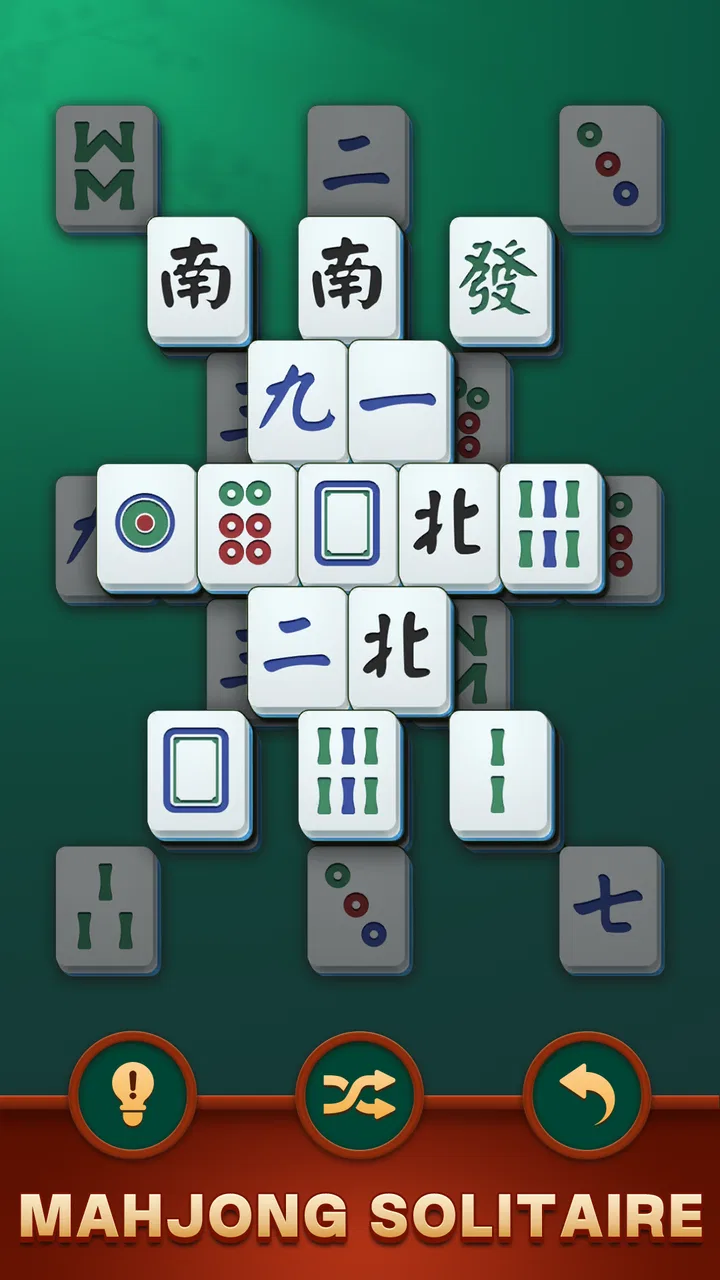
Mahjong Solitaire
- 4.9
- Rating
- 5.00M
- Installs
- Free
- Price

 Analysis by App-foxy
I have always liked board games that ask for attention without demanding a noisy, competitive atmosphere, and Mahjong Solitaire fits that mood particularly well. This is a tile-matching puzzle from Topy Games that keeps the familiar mahjong solitaire idea uncomplicated: clear the board by finding matching, available tiles. Its main appeal is not speed or spectacle, but the way a short session can turn into a quiet exercise in observation and memory.
That focus matters because the game is designed with seniors in mind, while remaining approachable for anyone who enjoys relaxed puzzles. I found it easiest to appreciate when I stopped treating each board as something to finish quickly. Instead, I looked at the layout, remembered where useful pairs were hiding, and made choices that kept future moves open. The strongest part of this game is the calm mental routine created by its simple matching goal.
Mahjong Solitaire is free to download and is suitable for Everyone. It runs on Android devices using version 6.0 or later, so it can work on many older phones and tablets as well as newer hardware. The current version is 1.9.2.20260325, and the game has already passed five million installs. A 4.9 average from around 140 thousand ratings suggests that its straightforward approach is connecting with a large audience.
You May Also Like

 Blood Strike: 2.5 Anniversary
Blood Strike’s Loadouts Turn Every Drop Into a Tactical Gamble
A close look at Blood Strike’s custom loadouts: how fast access to signature weapons reshapes its battle royale rhythm, rewards preparation, and narrows the gap between fights.

 Pandora - Music & Podcasts
Pandora’s Music Is Easy to Start, but Harder to Recover
Pandora’s strength is its low-effort path from a seed to a station. Its weak spot is how much confidence it asks you to place in connection, setup, and quiet recovery.

 8 Ball Pool
 Is Built on Rivalries, Rematches, and Routine
A close look at the rivalries, rematches, shared routines, and unanswered safety questions that turn a quick pool match into a persistent mobile community.

 Samsung Music
’s Quiet Strength Is Playing What You Already Own
Its reach comes less from spectacle than from dependable access to a personal library. That simplicity is both the app’s strongest retention engine and its ceiling.

 AccuWeather: Weather Radar
AccuWeather Review: A Quick, Clear Forecast for Everyday Decisions
For everyday plans, the best forecast is the one you can understand quickly. AccuWeather makes rain timing, radar, and local conditions easy to act on, with a few trade-offs.

 Hill Climb Racing
Why Hill Climb Racing Still Turns Crashes Into One More Run
A tiny car, a bumpy hill and one more upgrade: Hill Climb Racing keeps resurfacing because its simple chaos makes every near-miss feel personal.
More From Our News Desk



A closer look at the matching-and-memory experience
I find the matching-and-memory loop works best when I treat each board as a small planning exercise rather than a race to clear tiles. A useful habit is to pause before a pair with multiple possible partners and consider which choice exposes more of the layout; that keeps the puzzle thoughtful without adding pressure. This focus also helps explain what kind of progress the game offers—and what it leaves to the player to define.
Why the central capability feels different from ordinary matching games
The important capability here is the combination of visual matching and short-term memory. You are not simply looking for two identical symbols anywhere on the screen. In the usual mahjong solitaire format, a pair must also be available to select, which means the position of surrounding tiles affects what you can do next. That extra condition gives each move a small consequence.
In practice, I found myself scanning the board in layers. First I checked which tiles were exposed, then I noticed pairs that might become useful after another removal. This makes the game more thoughtful than a basic match-three puzzle, but it is still much gentler than a timed board game or a strategy title with complicated rules.
The memory element appears naturally rather than as a separate test. You may spot a matching tile under a stack or at the edge, but it may not be usable yet. Remembering that location helps later, especially when the board becomes less crowded. For a player who wants a light daily activity that encourages concentration, this is more meaningful than tapping randomly through a succession of obvious matches.
I would not describe it as a formal memory-training tool, and I would not use the store wording as a promise of a measurable cognitive result. What I can say from playing it is that the game repeatedly asks me to hold visual information in mind while checking whether a move is safe. That is a useful distinction: the benefit comes from the way the puzzle is played, not from a separate lesson or exercise mode.
How I approach a board
My first move is rarely the first pair I notice. I look for tiles that are restricting the most space, especially those sitting above other pieces or blocking a broad section of the layout. Removing one of those can reveal several future choices, while removing a pair from an unimportant edge may leave the board almost unchanged.
A practical habit is to identify more than one possible pair before tapping. If a matching tile has two possible partners, I consider which partner is more exposed and which removal opens more of the board. This small pause prevents the common mistake of using a convenient pair while leaving a more valuable route buried.
I also try to remember unusual symbols rather than relying only on their position. When several tiles look similar at a glance, visual attention becomes more important than speed. If the screen is small, I prefer playing on a tablet or holding the phone closer, because the whole experience depends on distinguishing tiles comfortably. That is especially relevant for older players or anyone with tired eyes.
Another useful approach is to treat the board as a sequence of decisions rather than a race. If I am unsure whether a pair is the best choice, I scan the remaining exposed tiles and ask which move gives me more information. This turns an apparently simple puzzle into a manageable planning exercise without making it stressful.
A realistic everyday session
Imagine finishing lunch and having ten quiet minutes before returning to work or an appointment. This game suits that gap better than a long story-driven title because there is no need to remember a plot, learn a character system, or prepare for a competitive match. I can open it, study a board, make a few careful removals, and stop when I need to move on.
It also works well as a low-pressure evening activity. I would not choose it when I want fast action or a strong sense of progression, but I would choose it when I want my attention occupied without filling the room with sound and urgency. The matching process gives my mind something specific to do, while the board format keeps the rules easy to recall.
For a family member who is not comfortable with complex mobile games, the learning curve is an advantage. Someone can understand the basic objective quickly, then improve through observation rather than memorizing instructions. I would still recommend checking that the tile designs are comfortable to see on the particular device, since ease of recognition matters more here than it does in a game with large colorful buttons.
Where it compares well with familiar alternatives
Compared with a traditional physical mahjong solitaire set, the mobile version is more convenient. There are no tiles to arrange, no table space to clear, and no pieces to lose between sessions. That makes it practical for travel, waiting rooms, or a quiet break at home. The trade-off is that the tactile feeling of handling real tiles is missing, so players who enjoy the physical ritual may still prefer a tabletop set.
Compared with match-three games, this is slower and more deliberate. Match-three titles often reward quick reactions, chain reactions, and colorful effects. Mahjong Solitaire puts more weight on finding legal pairs and preserving options. I prefer this when I want concentration without pressure, but a player who enjoys constant movement may find it restrained.
Compared with crossword or word puzzles, it avoids language as a barrier. That makes it easier to share with someone who does not want to read instructions or solve clues in a particular language. On the other hand, it offers less variety in the kind of thinking required. If you want vocabulary practice, deduction, or a changing set of questions, a word or logic app will probably offer more depth.
It is also less demanding than competitive board-game apps. There is no need to manage an opponent, learn a full rulebook, or wait for another person to take a turn. That simplicity is precisely why I think it works for seniors and casual players. It is not trying to replace a strategic board-game collection; it provides a compact, solitary puzzle instead.
The trade-offs I noticed
The same simplicity that makes the game accessible can make it feel limited after repeated sessions. If you want a large range of modes, elaborate goals, social play, or a strong narrative, this is unlikely to satisfy you for long. Its pleasure comes from repeating a focused activity and getting better at seeing the board, not from discovering a constantly expanding system.
There is also a difference between relaxing play and effortless play. A board can look calm while still requiring careful choices. If I make several removals without considering what remains available, I can reduce my options and make the puzzle harder for myself. That is not a flaw in the concept, but it means the game is better suited to someone willing to pause and inspect the layout.
Because the title is free, it is easy to try without committing money. In-app purchases are listed at $9.99 per item, so I would pay attention to any purchase prompt and avoid assuming that every optional item is necessary. For my style of play, the basic attraction is the puzzle itself, and I would only consider spending if an optional purchase clearly improved comfort or convenience for a particular player.
The age rating of Everyone is reassuring for families and older users, but it should not be confused with a guarantee that every person will enjoy the visual demands. A senior with reduced vision may need a larger screen or better lighting. In that situation, the best improvement may be changing the device or environment rather than looking for a more complicated game.
Another trade-off is that a familiar puzzle can become predictable. I like having rules that remain stable, yet I also understand why some players may eventually want more variation. If your ideal board game changes dramatically from one session to the next, you may prefer an app built around different puzzles instead of a single recognizable format.
Small habits that improve the experience
I recommend playing with the screen at a comfortable angle and avoiding glare. This sounds minor, but the game depends on identifying tile faces accurately. A bright reflection can make two symbols harder to distinguish and turn a relaxing session into unnecessary squinting.
I also suggest using a deliberate scan pattern. I start at the top and work across, then check the sides and the most exposed central pieces. Repeating the same visual route helps me avoid overlooking a legal pair. It is particularly useful for beginners because it replaces random searching with a simple routine.
When I am playing with an older relative, I let that person choose the pace and resist pointing out every possible move. The useful part is not merely clearing the board; it is noticing relationships between exposed tiles and future choices. Gentle conversation about why a pair is available can make the session more social without turning it into a test.
For short breaks, I stop after a board rather than opening the game automatically whenever I feel bored. That keeps the activity feeling intentional. For longer sessions, I take a visual break if I notice that I am matching by guesswork. Once attention drops, the memory benefit of remembering tile positions also becomes much weaker.
Who will gain the most from it
I think the best audience is someone who wants a quiet board puzzle with rules that can be understood quickly. Seniors may appreciate the familiar tile-based presentation and the chance to exercise visual attention at their own pace. Casual players who dislike timers, complicated controls, or competitive pressure should also feel comfortable here.
It is a good choice for a shared device in a household because the basic idea does not require a long tutorial. A parent, grandparent, or occasional player can pick it up without first learning a collection of special abilities. The Android requirement of 6.0 or later also makes it worth checking on an older phone before replacing the device solely for this game.
I would be more cautious about recommending it to someone who needs strong accessibility controls, though. The game’s usefulness depends on seeing and distinguishing the tiles, so the actual screen size and clarity of the device are central to the experience. I would test it personally with the intended player rather than assuming that a simple rule set automatically means a comfortable interface.
Players who want competition, online interaction, rich progression, or frequent novelty should probably choose another type of board game. This is also not my first recommendation for someone who finds repetitive matching boring. Its appeal is narrow but clear: it gives you a calm visual puzzle in which memory and careful selection matter more than speed.
My final assessment
After spending time with it, I see Mahjong Solitaire as a focused, accessible game rather than an all-purpose entertainment app. Topy Games has built its identity around a familiar board activity that can fit into a spare moment and remain understandable for a wide age range. The large install base and strong average rating reflect that broad appeal, but the real question is whether you enjoy slow observation more than fast rewards.
I would recommend it to a friend who wants a free, low-pressure puzzle for a phone or tablet, especially if that friend values concentration and does not need a long list of modes. I would also suggest trying it on the device that will actually be used, because tile visibility can make the difference between a pleasant session and a tiring one.
My honest recommendation is simple: choose this game for calm, deliberate matching, not for constant novelty. If that sounds like the kind of mental break you want, it is an easy title to try. If you are looking for competition, dramatic progression, or a broad collection of puzzle styles, a different board-game app will be a better fit.
FAQs for Mahjong Solitaire
01What is Mahjong Solitaire and how does it differ from traditional Mahjong?
Mahjong Solitaire is a single-player puzzle game that uses the same tiles as traditional Mahjong, but the gameplay is different. In Mahjong Solitaire, the goal is to match open pairs of identical tiles and remove them from the board, clearing all tiles to win. Unlike the four-player tabletop game, it doesn’t involve strategy or competition against others.
02What are the main features of Mahjong Solitaire that enhance the gaming experience?
Mahjong Solitaire typically includes features such as various tile designs, multiple board layouts, and difficulty levels to cater to different skill levels. Many versions also offer hints, shuffles, and undo options to assist players. The game often includes soothing background music and visually pleasing graphics to enhance the overall experience.
03Is Mahjong Solitaire suitable for all age groups?
Yes, Mahjong Solitaire is generally suitable for all age groups. Its simple rules make it accessible to children, while the strategic thinking required to solve more complex puzzles can engage adults. However, it’s always a good idea for parents to review the specific app’s content and features to ensure suitability for younger players.
04Are there any in-app purchases or ads in Mahjong Solitaire?
Many Mahjong Solitaire apps are free to download and may include ads to support the developers. Some versions offer in-app purchases for features like ad removal, additional tile sets, or board layouts. It’s advisable to check the app description on the download page for details on any potential costs associated with the game.
05Can I play Mahjong Solitaire offline, or is an internet connection required?
Most Mahjong Solitaire games can be played offline, allowing you to enjoy the game without an internet connection. However, certain features, such as daily challenges or leaderboard competitions, might require online access. Always check the app’s specifications to understand which features are available offline.
Pros
- Intuitive controls make gameplay smooth.
- Beautiful graphics enhance user experience.
- Variety of tile sets keeps it interesting.
- Daily challenges add replay value.
- Offline mode available for travel.
Cons
- Limited hints may frustrate beginners.
- Ads can interrupt gameplay experience.
- No multiplayer option available.
- In-app purchases may be costly.
- Repetitive music lacks variety.

Mahjong Solitaire
Gallery